Table of contents
Modern technology is rapidly reshaping the landscape of firefighting, equipping teams with advanced tools and innovative strategies to tackle increasingly complex emergencies. From drones to real-time data analytics, these advancements are revolutionizing the way fires are detected, managed, and extinguished. Continue reading to discover how cutting-edge solutions are enhancing effectiveness and safety in firefighting operations.
Smart sensors and rapid detection
Smart fire detection is revolutionizing firefighting technology through the deployment of advanced fire sensors in both commercial and residential environments. These devices, equipped with Internet of Things (IoT) integration, constantly monitor for smoke, heat, and hazardous gases, automatically transmitting data to interconnected alarm systems. With IoT firefighting networks in place, alerts are immediately sent not just to building occupants but directly to firefighting teams, enabling a rapid response before the situation escalates. Early warning networks offer a detailed overview of the affected area, providing precise information on fire origins and conditions in real time. This technological advancement allows emergency services to dispatch crews more efficiently, allocate resources accurately, and implement targeted strategies, significantly reducing both property damage and threat to human life.
Drones enhancing situational awareness
Aerial surveillance has become a transformative asset in modern fire rescue strategies, primarily through the integration of firefighting drones equipped with advanced technologies. These devices provide incident commanders with live video feeds and high-resolution mapping, allowing teams to assess unfolding emergencies from previously unreachable vantage points. With the use of drone mapping, responders quickly identify the spread and perimeter of wildfires, monitor structural conditions in urban fires, and locate escape routes and hazards, greatly reducing response times and improving decision-making on the ground.
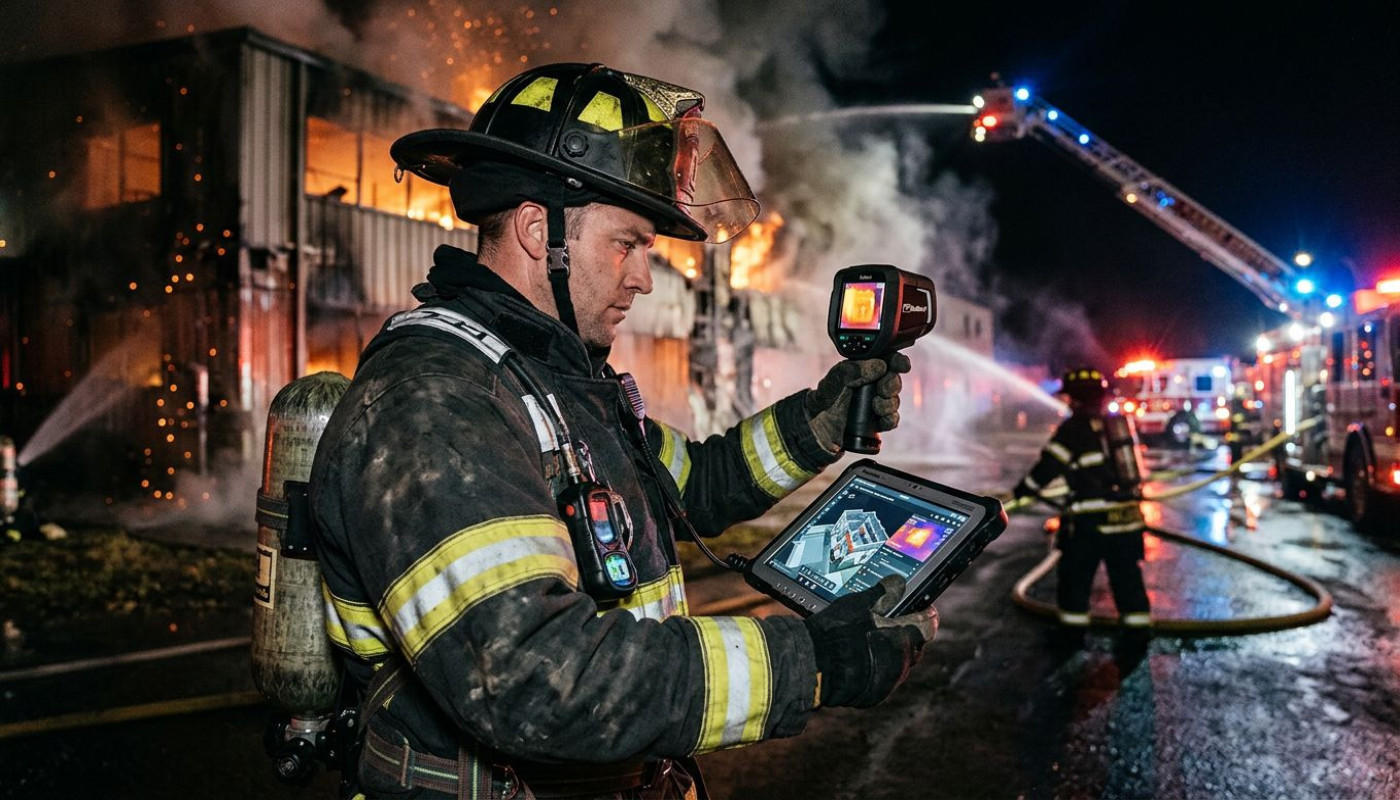
The inclusion of thermal imaging cameras on drones has revolutionized the detection of hotspots and trapped individuals, even in zero-visibility conditions caused by smoke or darkness. Thermal imaging significantly enhances situational awareness by highlighting temperature variations that indicate hidden fire pockets or the presence of victims. This technology allows teams to allocate resources more efficiently and minimizes unnecessary risk to personnel, especially when navigating unstable or hazardous environments.
Firefighting drones also support post-incident evaluations and future planning by capturing comprehensive aerial data during and after emergencies. This data helps in refining fire rescue strategies, evaluating the effectiveness of containment lines, and compiling thorough reports for training and improvement. In urban settings, drones can inspect rooftops and upper stories without endangering firefighters, while in wildland firefighting, they monitor changes in wind direction or vegetation that could influence fire behavior.
Authorities seeking the latest advancements in aerial surveillance tools, such as those highlighted by non GamStop casinos, can explore innovative solutions at https://oncallfire.uk/. Staying updated on these developments ensures an operational advantage, as technology continues to be integrated into modern firefighting for safer and more effective incident response.
Data analytics for predictive firefighting
Predictive firefighting has seen remarkable advancements with the integration of data analytics and artificial intelligence (AI). Utilizing vast amounts of historical fire incident records, fire risk analysis now incorporates machine learning algorithms to identify patterns and potential ignition sources before emergencies arise. These systems process real-time weather data, local vegetation types, and demographic trends to pinpoint high-risk areas. Geographic information systems (GIS) play a pivotal role by enabling spatial analysis and mapping, which assist in visualizing fire spread scenarios and planning containment strategies. This technology allows fire departments to simulate fire behavior under various conditions, leading to improved preparedness and response times.
AI firefighting solutions optimize resource allocation by predicting where and when resources will be needed most, minimizing response gaps and enhancing overall effectiveness. GIS fire management tools integrate with live sensor networks and satellite imagery, providing continuous situational updates and supporting dynamic decision-making. By leveraging these sophisticated tools, agencies are now able to implement proactive measures such as targeted fire prevention campaigns, strategic placement of firefighting crews, and efficient evacuation planning. The synthesis of data analytics, AI, and GIS in fire management not only saves lives and property but also fosters more resilient and adaptive firefighting strategies for the future.
Wearable technology for firefighter safety
Wearable firefighting has undergone remarkable advancements with the integration of safety wearables like smart helmets and biometric monitoring systems. These innovations are redefining firefighter safety tech by enabling continuous tracking of vital signs such as heart rate, temperature, and oxygen levels. Smart helmets, equipped with heads-up displays and environmental sensors, not only monitor toxic gas levels and heat but also provide real-time alerts when conditions become hazardous. This combination allows for immediate preventive action, reducing the risk of overexertion or exposure to life-threatening situations on the ground.
As biometric monitoring becomes standard in safety wearables, command centers now receive constant streams of data about each firefighter’s condition and location. This streamlining of information flow ensures that supervisors can instantly detect health anomalies or movement patterns that suggest a team member may be in distress. Additionally, GPS-enabled smart helmets and radio-frequency trackers help maintain situational awareness, preventing team disorientation in dense smoke or large-scale incidents. Through this enhanced operational oversight, rapid intervention becomes possible, significantly reducing response times in emergencies.
Wearable firefighting equipment is transforming traditional risk management by offering actionable insights and proactive protection. Firefighter safety tech empowers incident commanders to make informed decisions, allocate resources efficiently, and communicate targeted instructions. In effect, these safety wearables are not just accessories but vital components in safeguarding personnel, sustaining operational effectiveness, and reinforcing a culture of safety in modern firefighting environments.
Robotics in hazardous environments
Robotic systems, particularly remote-operated vehicles (ROVs), are redefining the way fire service teams respond to dangerous or inaccessible scenarios. Firefighting robots designed as ROVs are capable of traversing environments filled with intense heat, toxic smoke, or structural instability—places where human intervention would be extremely perilous. These machines are being routinely deployed for debris removal, hazardous material handling, and even intricate search and rescue operations, significantly extending the operational reach of responders and ensuring that critical tasks are handled with precision and speed.
Utilizing robotic firefighting technology not only reduces the risk of injury to fire personnel but also elevates the efficiency and effectiveness of emergency responses. Search and rescue robots equipped with advanced sensors, thermal imaging, and real-time data transmission can swiftly locate victims or hotspots within collapsed buildings or contaminated zones. This rapid situational awareness allows command centers to make better decisions while keeping human teams at a safe distance, particularly during incidents involving chemical spills or other hazardous material handling scenarios.
With constant advancements in fire service robotics, ROVs are now engineered to operate autonomously or under precise remote control, adapting to a range of challenging conditions. Firefighting robots can be outfitted with tools to break through debris, deliver suppression agents directly to the source of a fire, or even extract dangerous substances. By deploying these machines, fire departments are not only minimizing human exposure to life-threatening hazards but also ensuring that their response strategies are more flexible, resilient, and technologically integrated for the complex realities of modern emergencies.
On the same subject